
Routine Maintenance You Can Safely Do Yourself (and What to Leave to a Pro)

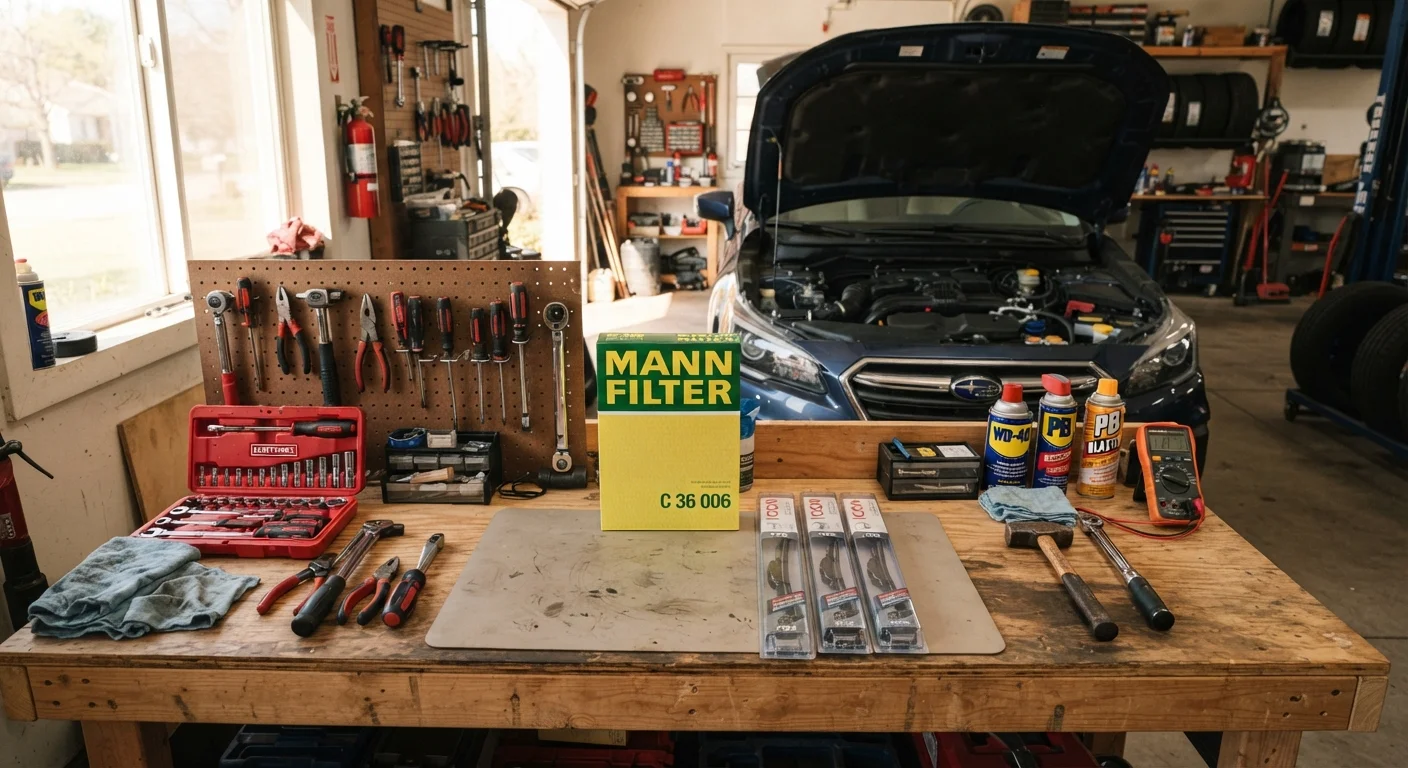
Photo: primesearches.net editorial
Key Takeaways
- Air filters, wiper blades, and cabin filters are straightforward tasks most drivers can handle at home.
- Brake work, suspension repairs, and anything involving fuel or coolant systems generally require a qualified mechanic.
- Doing simple tasks yourself can save $20 to $80 per visit in labor charges, depending on the shop.
- Knowing your vehicle's owner manual is the single most useful reference for maintenance intervals.
- Attempting complex repairs without the right tools or knowledge can create safety risks and costlier damage.
What makes a task safe to DIY
Three factors separate a reasonable DIY job from one that belongs in a shop: the complexity of the procedure, the tools required, and the consequences of a mistake. A task that involves unbolting one or two components, swapping a part that clips or slides into place, and confirming the result visually is generally low-risk. A task that requires precise torque settings, specialized equipment, or affects a system that controls braking, steering, or structural integrity is not.
Your owner manual is the most reliable guide to intervals and procedures. It is written for your specific vehicle and does not require any mechanical background to read. Most libraries also carry manufacturer service data through online databases if you want more detail.
For a broader look at managing car costs from the start, see vehicle ownership on a tight budget.
| Task | DIY or pro | Typical part cost | Typical labor saved | |
|---|---|---|---|---|
| Engine air filter | DIY | $15-$30 | $20-$40 | |
| Cabin air filter | DIY | $15-$25 | $30-$50 | |
| Wiper blades | DIY | $20-$40 per pair | $15-$25 | |
| Fluid top-offs | DIY | $5-$15 | $15-$30 | |
| Brake pad replacement | Pro | $30-$80 per axle | N/A: safety risk | |
| Spark plugs (modern engine) | Pro | $20-$60 | N/A: damage risk | |
| Suspension components | Pro | Varies widely | N/A: alignment required |
Tasks most drivers can handle at home
Engine air filter: On most vehicles, the air filter sits in a plastic housing secured by clips or a few screws. Replacing it takes under 10 minutes, costs $15 to $30 for the part, and requires no tools beyond possibly a flathead screwdriver. A clogged filter reduces engine efficiency, so this is worth doing on schedule, typically every 15,000 to 30,000 miles depending on driving conditions.
Cabin air filter: This filter cleans air entering the passenger compartment. Access varies by vehicle, but many models route it behind the glove box or under the dashboard, reachable without tools. Parts run $15 to $25, and shops often charge $50 or more to install one.
Wiper blades: Most wiper blades attach with a simple hook-and-pin mechanism. The replacement package includes instructions, and the job takes a few minutes per blade. Skipping this when blades streak or skip creates a visibility hazard, not just an annoyance.
Fluid top-offs: Checking and topping off windshield washer fluid, coolant reservoir level (when the engine is cold), and power steering fluid are visual checks with no disassembly involved. Do not open a radiator cap on a hot engine: the system is pressurized and can cause burns.
These habits connect directly to keeping a high-mileage vehicle running well.
Where to stop and call a professional
Brake pads may seem like a natural next step after filters, but the job involves compressing caliper pistons, torquing wheel bolts to specification, and verifying rotor condition. An error can cause brake fade or failure. Unless you have done this before with guidance, a qualified mechanic is the right call.
The same applies to anything in the fuel system. Fuel lines carry flammable liquid under pressure; disturbing them without the right tools and knowledge creates fire risk. Spark plug replacement is manageable on many older engines with easy access, but on modern vehicles with coil-on-plug ignition and tight engine bays, the job can strip threads or crack porcelain if done incorrectly.
Suspension components (ball joints, tie rods, control arms) affect how the vehicle steers and handles. They require alignment after replacement, which needs a shop lift and computerized equipment. Airbag systems contain explosive charges and must never be disassembled by anyone without training: accidental deployment causes serious injury.
Never attempt airbag or ABS system work at home
Before any shop visit, prepare with a pre-visit checklist so you arrive informed and ready to ask the right questions. Once you have an estimate, understanding each line item on a repair estimate helps you evaluate whether the charges are reasonable.
Honest cost math
A shop that charges $80 an hour in labor adds roughly $20 to $40 in labor cost to a 15-to-30-minute job like a cabin filter or wiper blade. For three or four such tasks a year, DIY saves $80 to $150 annually without any specialized skill. That math shifts when a task requires a lift, specialty sockets, a scan tool, or calibration equipment, none of which a typical family has at home.
The cost of a botched repair also matters. A stripped oil drain plug can cost $200 or more to fix. Improper brake work can cost far more, in repairs and in liability if it contributes to an accident. The financial case for DIY only holds when the task is genuinely within reach.
This article is for general informational purposes only. For vehicle-specific repair decisions, consult a licensed mechanic. Safety-critical systems including brakes, steering, fuel, and airbags should be serviced by a qualified professional.
The content provided on our blog site traverses numerous categories, offering readers valuable and practical information. Readers can use the editorial team’s research and data to gain more insights into their topics of interest. However, they are requested not to treat the articles as conclusive. The website team cannot be held responsible for differences in data or inaccuracies found across other platforms. Please also note that the site might also miss out on various schemes and offers available that the readers may find more beneficial than the ones we cover.