
Before You Take Your Car In for Service: A Pre-Visit Checklist

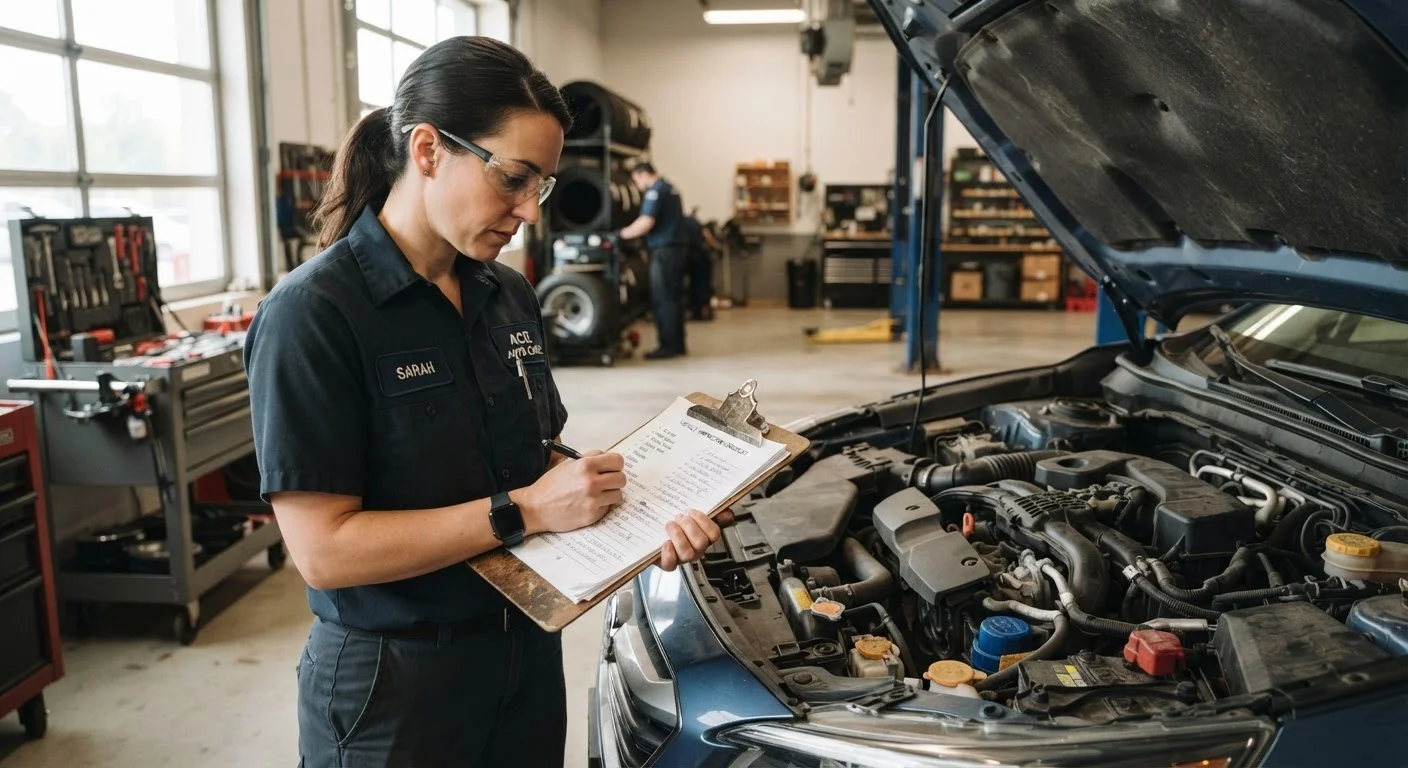
Photo: primesearches.net editorial
Key Takeaways
- Documenting symptoms precisely before your visit helps mechanics diagnose problems faster and reduces billable labor time.
- Knowing your vehicle's service history prevents duplicate repairs and supports warranty claims.
- Getting a written estimate before work begins gives you a record to compare against the final invoice.
- Asking about warranty coverage on parts and labor can save hundreds of dollars on future repairs.
- Understanding what your repair order authorizes protects you from unexpected charges.
Why preparation pays off at the service bay
Most service visits that go over budget or drag on longer than expected share one cause: the driver arrived without the right information. A mechanic who has to guess at symptoms, chase down service history, or wait for an owner decision burns time, and that time appears on your invoice as labor charges.
Spending 20 to 40 minutes on this checklist before you drive in puts you in control of the conversation. You will know what to authorize, what to question, and what to decline. For broader guidance on managing vehicle costs, see our practical guide to vehicle ownership on a tight budget.
Document the problem
Gather your paperwork
Set your budget and authorization limits
Questions to ask at drop-off
Before you hand over the keys
What to bring and what to know before you arrive
The items below fall into a predictable pattern. Document the problem in plain language. Gather your paperwork. Set a spending limit in advance. Each step removes one more variable that could push your bill higher than it needs to be.
Verbal authorizations can lead to disputes
Once the shop hands you an estimate, you do not have to decide on the spot. Ask for a written copy and take a few minutes to review every line. Our article on reading a repair estimate walks through what labor rates, parts markups, and shop fees actually mean before you sign off.
If any items on the estimate involve fluid changes, filter swaps, or other routine tasks, check first whether those fall within your own comfort zone. Our guide on routine maintenance you can safely do yourself covers which tasks are genuinely straightforward DIY jobs and where the line is.
Maintenance log or service records
Gives the technician a history of past repairs so they can spot patterns and avoid repeating work already done.
Warranty or extended service contract documents
Required to verify whether the current repair may be covered at no cost to you.
Smartphone with camera and voice recorder
Lets you capture the symptom sound or visual before it disappears, and document the vehicle's condition at drop-off.
Written symptom notes
A clear, specific description of the problem helps the technician diagnose faster and reduces time spent on your bill.
The content provided on our blog site traverses numerous categories, offering readers valuable and practical information. Readers can use the editorial team’s research and data to gain more insights into their topics of interest. However, they are requested not to treat the articles as conclusive. The website team cannot be held responsible for differences in data or inaccuracies found across other platforms. Please also note that the site might also miss out on various schemes and offers available that the readers may find more beneficial than the ones we cover.