
Underrated U.S. National Park Experiences That Families Often Overlook

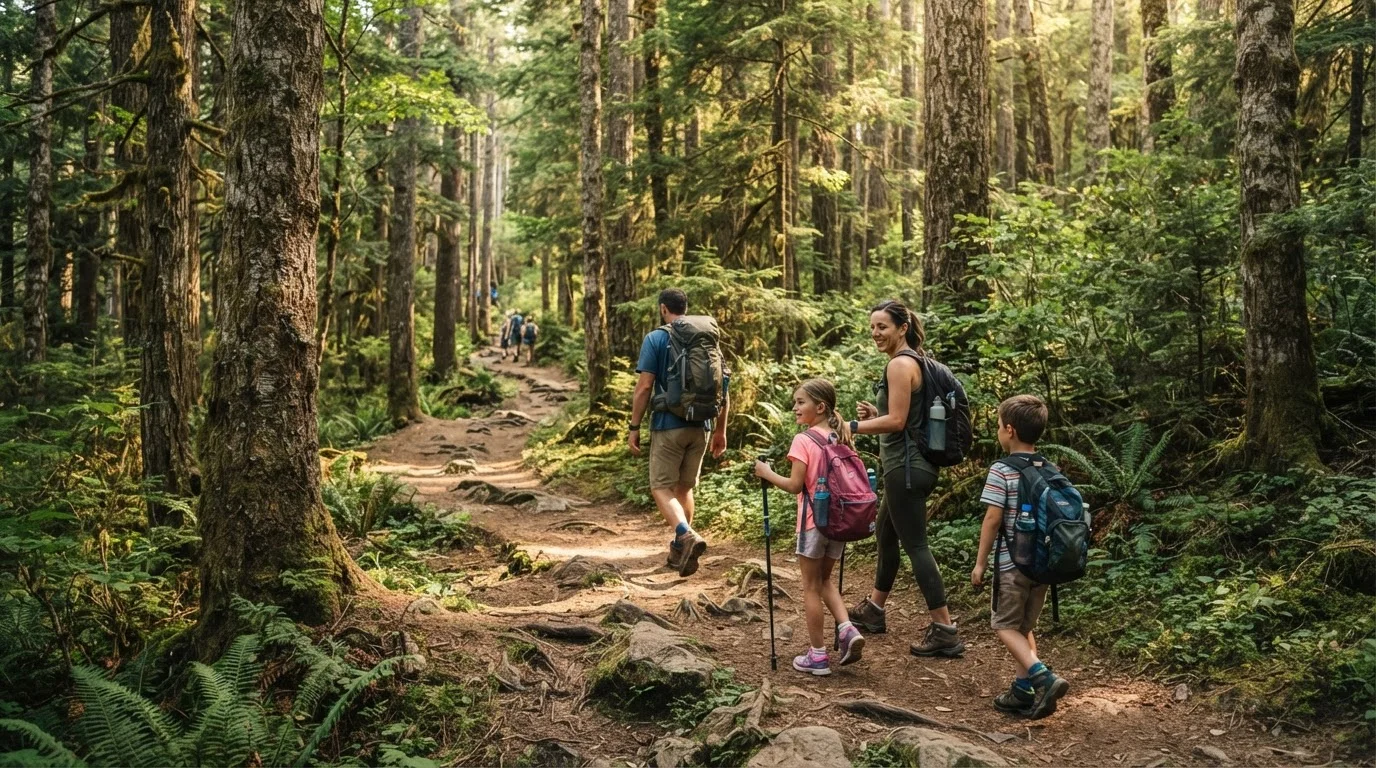
Photo: primesearches.net editorial
Key Takeaways
- Junior Ranger programs are free at most parks and give kids a structured, engaging way to explore.
- Ranger-led programs, often free with park admission, cover everything from stargazing to geology.
- Lesser-known park units, including monuments and recreation areas, charge less and see far fewer crowds.
- Bringing your own food dramatically cuts per-day costs compared to park concessions.
- The America the Beautiful annual pass pays for itself quickly for families who visit more than one park a year.
What most families walk right past
The pull of a famous overlook is real. Families drive hours to stand at the rim of the Grand Canyon or catch a geyser eruption at Yellowstone, then head home feeling like they checked the box. What they often miss is that the National Park Service manages more than 400 sites across the country, and a large share of those deliver genuine wilderness, history, and family memories at a fraction of the cost and crowd pressure of the headliners.
Even inside the marquee parks, most visitors stick to a narrow corridor of paved paths and viewpoints. Step a mile off that corridor and you are in a different experience entirely. The tips below are about widening that corridor, whether you are visiting a park you have been to before or planning a trip to somewhere new. For broader strategies on keeping travel affordable, see our family vacation budget guide.
Junior Ranger programs
Almost every National Park Service site runs a Junior Ranger program. Kids collect a booklet at the visitor center, complete activities tied to the park's specific geography or history, then get sworn in by a ranger and receive a badge or patch. The cost is usually nothing or close to it.
Beyond the badge, the program structures a child's visit in a way that passive sightseeing does not. Kids read trail signs with purpose, ask rangers questions, and leave with a tangible record of what they learned. Many families find their children are more engaged on Junior Ranger days than on any guided tour they paid for.
Junior Ranger programs give kids a purpose-driven way to explore the park, often for free.
Free ranger-led programs
The Park Service runs hundreds of ranger-led walks, talks, and demonstrations across its sites every day. Topics range from geology and wildlife tracking to Indigenous history and night-sky astronomy. These programs are included with park admission and are listed on each park's website and on the bulletin boards at visitor centers.
Evening programs at park amphitheaters are a particular standout for families. A ranger explaining the Milky Way above a dark-sky park, or narrating the migration of elk, tends to land differently with kids than a museum exhibit. Check the schedule before you arrive and plan at least one session into your itinerary.
Evening ranger programs at park amphitheaters often become the most memorable part of a trip.
Lesser-known park units
The National Park Service encompasses national monuments, seashores, recreation areas, historic sites, and parkways alongside the flagship parks. Many of these charge lower entry fees, and some are free. Crowds are usually a fraction of what you find at the famous names.
Families willing to visit a national monument or a national recreation area instead of, or alongside, a well-known park often get a more relaxed experience. Think Cuyahoga Valley in Ohio, Great Sand Dunes in Colorado, or Congaree in South Carolina. These are full-scale natural environments with trails, wildlife, and ranger programs, and they are far easier to navigate with young children.
This connects to a broader point our destination comparison guide covers: spending less and crowding less often means experiencing more.
Lesser-known park units frequently deliver more breathing room and lower costs than flagship names.
The America the Beautiful annual pass
The America the Beautiful Interagency Annual Pass covers entrance fees at all federal fee-charging sites for one year. One pass admits all passengers in a single vehicle at most parks. For a family that visits two or more fee-charging sites in a year, the math generally works in their favor.
The pass is available at park entrance stations and online through the U.S. Geological Survey store. A version at a reduced rate is available for people with permanent disabilities, and a free version for fourth-grade students is part of the Every Kid Outdoors program. Verify current pricing and eligibility directly with the National Park Service before purchasing, as terms can change.
One annual pass can cover an entire family's entrance fees across all federal land sites for a full year.
Dispersed camping and backcountry permits
Front-country campgrounds at popular parks fill up months in advance, but backcountry permits for the same parks are often available closer to your travel dates. Backcountry sites cost less per night than developed campgrounds and put your family in landscapes most visitors never reach.
On lands managed by the Bureau of Land Management adjacent to many national parks, dispersed camping (camping outside designated sites, within posted rules) is generally permitted at no charge. Families with any tent-camping experience can access nights under genuinely dark skies for the cost of supplies they already own. Always check current regulations with the managing agency before you go, as rules vary significantly by location and season.
Backcountry permits often open up far more solitude than front-country campgrounds, usually at lower cost.
Shoulder-season timing
Most national parks see peak visitation in July and August. Visiting in May, early June, September, or October means shorter lines at entrance gates, available parking at trailheads, and campsite reservations that do not require booking six months out.
Shoulder seasons also mean lower rates at gateway towns, which is where most family travel costs actually accumulate. A motel in a gateway town during peak summer can run significantly higher than the same room in late September. Weather varies by park and elevation, so check conditions for your specific destination before settling on dates. The savings extend beyond park gates, which our vacation budgeting guide covers in more depth.
Visiting in shoulder seasons means shorter lines, available campsites, and lower rates in gateway towns.
Ranger station conversations
Visitor centers get most of the foot traffic, but smaller ranger stations deeper in the park are where you find rangers with time to talk. Ask about trail conditions, wildlife activity, and which areas are seeing the least traffic that week. Rangers at these stations give current, specific information that no guidebook or website can match.
This kind of on-the-ground intelligence helps families avoid crowded overlooks and find the lake or meadow that has been quiet all week. It takes ten minutes and costs nothing. Bring your map, ask specific questions, and take notes.
A ten-minute conversation at a small ranger station can redirect your itinerary toward the park's quiet spots.
Making the most of what you already paid for
Park admission covers more than the gate. Once your family is inside, the programming, trails, and facilities available to you are extensive. A Ranger talk costs nothing beyond your entry fee. A Junior Ranger booklet is usually a dollar or free at the visitor center. Backcountry permits add a small fee but open up campsites that see a tiny fraction of the front-country traffic.
Families who pack their own meals and snacks rather than relying on concessions can save a meaningful amount each day. That money can go toward a backcountry permit, a guided paddle, or simply another night in the park. If you find yourself spending on food more than you planned, it may be worth revisiting grocery and provisions habits before the next trip. National parks are one of the few travel categories where careful planning consistently returns more experience per dollar, and the activities listed here are a good place to start.
Pack provisions before you enter
The content provided on our blog site traverses numerous categories, offering readers valuable and practical information. Readers can use the editorial team’s research and data to gain more insights into their topics of interest. However, they are requested not to treat the articles as conclusive. The website team cannot be held responsible for differences in data or inaccuracies found across other platforms. Please also note that the site might also miss out on various schemes and offers available that the readers may find more beneficial than the ones we cover.