
Road Trips vs. Flying: What Families Actually Save (and Lose) With Each

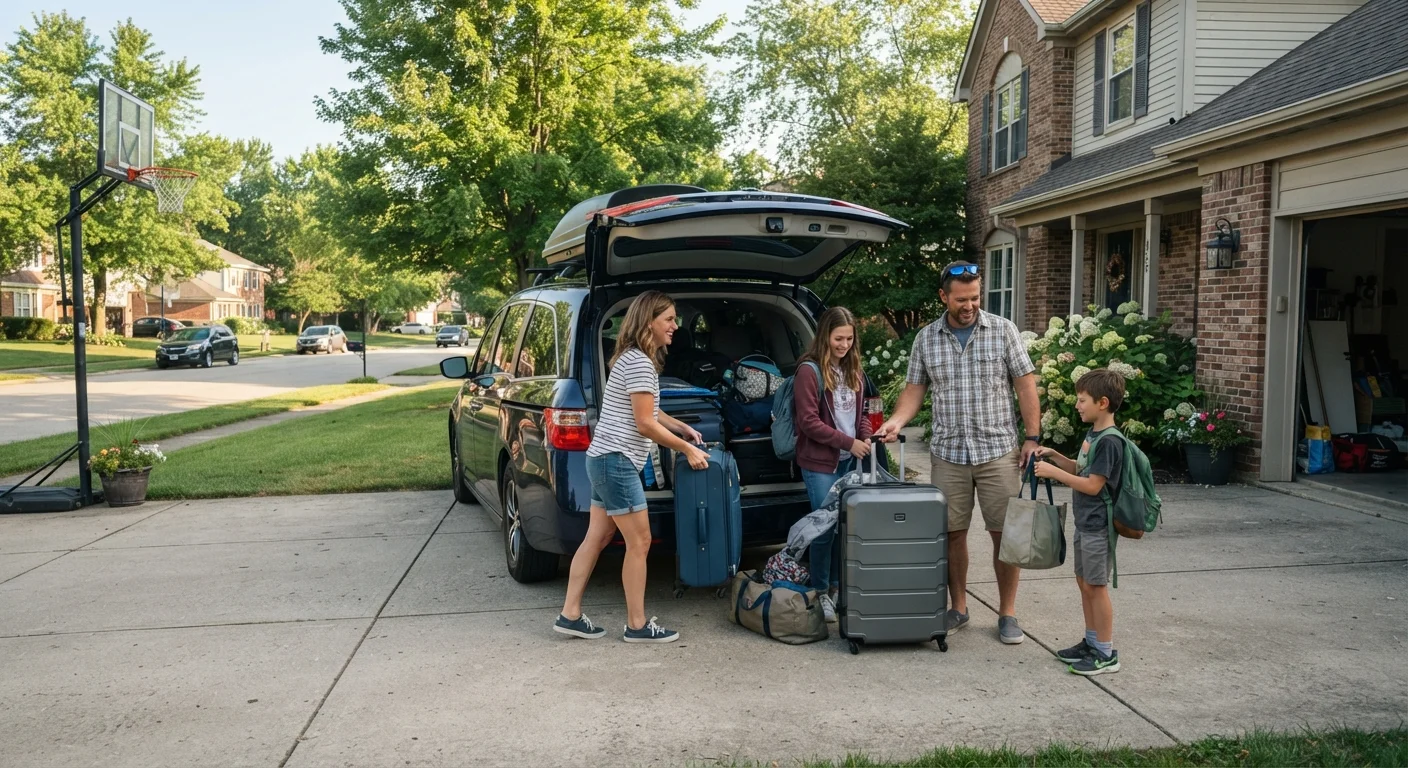
Photo: primesearches.net editorial
Key Takeaways
- Driving usually costs less per mile than flying once you count per-seat airfare for a family of four.
- Flying wins on time for trips over 500 miles, but that time saving costs real money in fees and airport logistics.
- Hidden costs on both sides, including tolls and baggage fees, routinely surprise families who skip the full accounting.
- The break-even point between driving and flying shifts significantly with fuel prices, family size, and destination.
- Packing flexibility and no baggage fees are concrete financial advantages of road trips.
Where the real money goes on a road trip
Families often assume that driving is automatically cheaper, and for many trips it is. But the full cost of a road trip goes beyond a tank of gas. Fuel is the obvious line item: a 600-mile round trip in a vehicle averaging 28 miles per gallon, with gas at roughly $3.50 per gallon, comes to about $75 in fuel. In a larger SUV averaging 20 mpg, that same trip costs around $105. Neither figure is alarming on its own.
The costs that catch families off guard are food stops, tolls, and lodging. A family that spreads a 900-mile drive over two days adds one or two hotel nights, typically $100 to $180 per night depending on location and season. Meals on the road, even with a cooler for snacks, tend to run $50 to $80 per day for a family of four at casual restaurants or fast food. Tolls on routes through the Northeast or Florida can add $15 to $40 each way.
Vehicle wear is real but harder to quantify. The IRS business mileage rate, which approximates full per-mile vehicle operating costs, has historically hovered around 65 to 67 cents per mile. At that rate, a 1,200-mile round trip carries an implied cost of roughly $780 to $800 in total vehicle expense, fuel included. That number is worth knowing even if it does not show up on a receipt. For more on managing vehicle-related costs, see our automotive guidance.
What flying actually costs a family of four
Airfare is priced per seat, which is where flying immediately disadvantages larger families. A domestic round-trip fare of $200 per person sounds reasonable until you multiply it by four and land at $800 before a single bag is checked. Checked baggage fees at most US carriers run $30 to $40 per bag each way, so two bags for a family of four can add $120 to $160 to the round-trip total.
Airport logistics carry their own costs. Parking at a major airport for a week typically runs $90 to $150 in long-term lots. Rideshares to and from the airport for a family with luggage often cost $40 to $70 each way in a larger vehicle. Ground transportation at the destination, whether a rental car or rideshares throughout the trip, adds another layer that road-trippers simply do not face.
The time cost deserves honest accounting too. A two-hour flight expands to a five-or-six-hour ordeal when you include the drive to the airport, check-in, security, boarding, and collecting bags at the other end. Families with young children often find that airport stress is its own hidden toll. On packing strategy that helps reduce baggage fees, see what families most often get wrong.
| Criterion | Road trip | Flying |
|---|---|---|
| Base cost for family of 4 | Fuel + wear per mile | Airfare x 4 seats |
| Luggage | Unlimited, no added fee | $30-$40 per bag each way |
| Time (500-mile trip) | 8-9 hours driving | 5-6 hours door to door |
| Overnight stops needed | Often required over 600 miles | None |
| Ground transport at destination | Your own car available | Rental or rideshare required |
| Flexibility en route | High: stop, detour, adjust | None once booked |
| Best distance range | Under 500 miles one-way | Over 700 miles one-way |
The break-even math and when each option flips
For a family of four, the break-even distance between driving and flying generally falls somewhere between 400 and 600 miles one-way, though the exact number shifts with fuel prices, airfare sales, and how many nights a long drive requires. Below 400 miles, driving wins on cost almost every time. Above 700 miles, the math gets genuinely competitive, and beyond 1,000 miles, flying typically pulls ahead once you account for multiple hotel nights, meals, and the vacation days consumed by driving.
Family size is one of the most important variables. A couple traveling alone faces a very different calculation than a family of five, because each additional airline seat raises the airfare total while adding almost nothing to the cost of driving. The car's fuel economy matters equally: a minivan getting 24 mpg and a large truck getting 16 mpg face a $60-plus gap on a 500-mile trip, which can shift the comparison.
Timing and destination also matter. Shoulder-season travel can bring airfares down enough to change the calculus, and families with travel rewards points may close the cost gap further. For a broader look at managing the full vacation budget, these destination-agnostic principles are worth reviewing before you book anything.
The content provided on our blog site traverses numerous categories, offering readers valuable and practical information. Readers can use the editorial team’s research and data to gain more insights into their topics of interest. However, they are requested not to treat the articles as conclusive. The website team cannot be held responsible for differences in data or inaccuracies found across other platforms. Please also note that the site might also miss out on various schemes and offers available that the readers may find more beneficial than the ones we cover.