
Packing Light With Kids: What Families Consistently Get Wrong

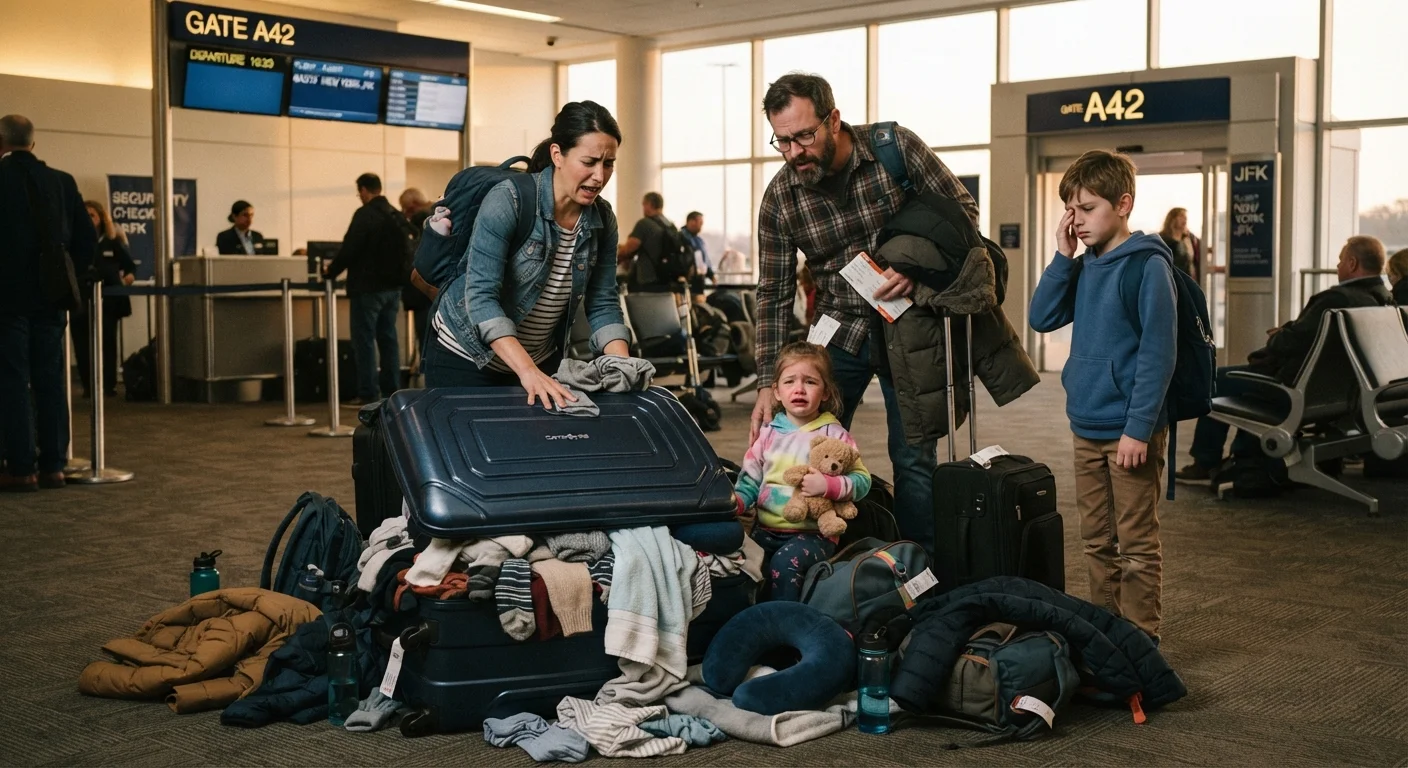
Photo: primesearches.net editorial
Key Takeaways
- Checked baggage fees can add hundreds of dollars to a family trip when multiple bags are involved.
- Packing for every possible scenario almost always means bringing items that never leave the bag.
- Kids' clothing takes far less space than parents expect when neutral pieces are planned to mix and match.
- Bulky comfort items for children are often replaceable at the destination for less than a baggage fee.
- A shared packing list reviewed two days before departure catches duplicate and unnecessary items.
Why overpacking hits family budgets harder than most parents realize
A single checked bag on a domestic flight can cost anywhere from $30 to $40 each way, and that fee multiplies fast across a family of four. Round-trip, two bags per adult, and suddenly you have added $120 to $160 before anyone has left the curb. That money could cover a full day of meals or admission to a park. For families already watching costs, baggage fees are a leak worth plugging, and packing light is the fix.
The problem is that most families approach packing as a defensive exercise: bring everything that might be needed. That instinct is understandable when kids are involved, but it produces bags so heavy they strain backs and slow down every transit leg. Road trips and flying each carry hidden costs, and checked baggage is one of the most controllable expenses on the flying side.
The most common packing mistakes families make
Packing a separate, fully stocked bag for each child.
Bringing full-size toiletries for every family member.
Packing children's shoes for every possible activity.
Loading the bag with entertainment gear for the kids.
Treating the "just in case" category as unlimited.
Forgetting to account for what you will bring home.
Getting packing right is not about ruthless minimalism. It is about making deliberate choices so the bag works for the trip rather than against it. Families who nail this tend to review their list as a group two days before departure, not the night before, giving enough time to remove duplicates and rethink bulky items. For a broader look at pre-trip decisions, the family trip planning checklist covers the full picture from passports to insurance.
How lighter bags improve the whole trip
Weight limits catch families off guard
Families who carry on consistently report that transitions between airports, trains, and hotels move faster. There is no wait at baggage claim, no risk of a lost bag derailing the first day, and no scramble to check a bag that crept over the weight limit. Those logistical wins compound across a multi-stop trip.
Lighter packing also tends to reduce decision fatigue. When children have a smaller wardrobe to choose from, mornings are quicker. When parents are not inventorying a large bag every night, mental energy stays on the experiences. Families traveling on shoulder season schedules often move between multiple destinations; in those itineraries, a carry-on is far more practical than a checked bag.
If the goal is stretching every dollar, packing discipline belongs alongside every other budget strategy. The principles that hold up across any destination put baggage choices in the same conversation as accommodation and food spending, because together they determine how far the travel budget actually reaches.
The content provided on our blog site traverses numerous categories, offering readers valuable and practical information. Readers can use the editorial team’s research and data to gain more insights into their topics of interest. However, they are requested not to treat the articles as conclusive. The website team cannot be held responsible for differences in data or inaccuracies found across other platforms. Please also note that the site might also miss out on various schemes and offers available that the readers may find more beneficial than the ones we cover.