Why Skipping the Annual Furnace Filter Change Costs You More Than the Filter Does

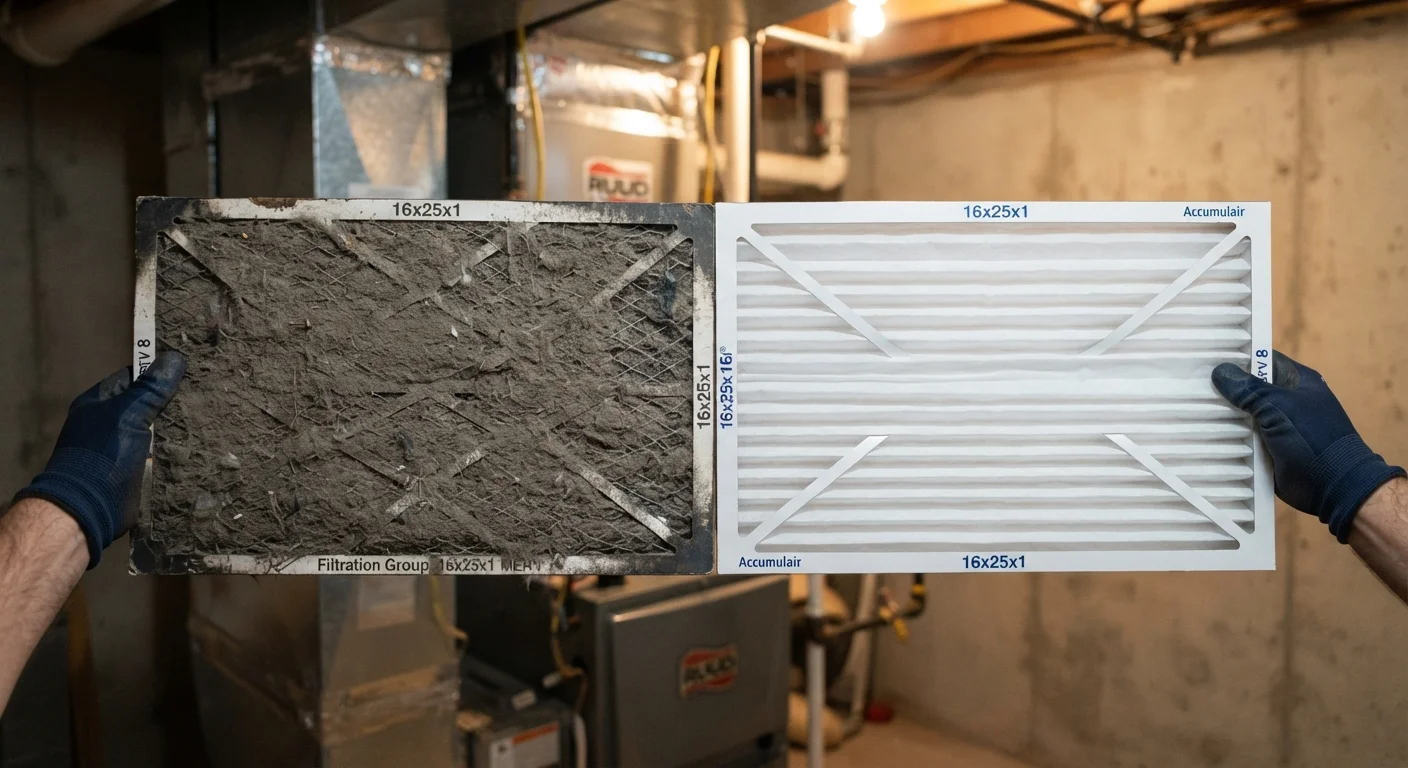
Photo: primesearches.net editorial
Key Takeaways
- A clogged furnace filter makes your system work harder, raising monthly energy bills noticeably.
- Restricted airflow can cause overheating and trigger safety shutdowns, shortening equipment life.
- Dirty filters push allergens and particulates into living spaces, worsening indoor air quality.
- Replacing a filter takes under five minutes and costs far less than a service call or early replacement.
- Most households should change standard 1-inch filters every one to three months, not once a year.
What a clogged filter actually does to your furnace
A furnace filter has one job: stop dust, debris, and particulates from reaching the blower motor and heat exchanger. When that filter becomes dense with captured material, air cannot move through it freely. The blower motor compensates by running longer and harder to pull the same volume of air through a much smaller effective opening.
That extra strain shows up on your utility bill first. A restricted furnace can use meaningfully more electricity or gas to heat the same space, because it cycles longer to reach the thermostat setpoint. Over a full heating season, that difference compounds into real money.
The second consequence is heat buildup. When airflow slows, heat accumulates around the heat exchanger faster than the blower can carry it away. Most modern furnaces have a high-limit switch that shuts the system down before temperatures become dangerous, but repeated cycling of that switch degrades its reliability over time. A limit switch replacement is a routine repair, but it is a cost that a clean filter would have prevented entirely.
Pair filter discipline with other low-cost efficiency measures. Sealing air leaks around windows and doors is another straightforward step that reduces how hard your furnace has to work in the first place.
Common mistakes homeowners make with furnace filters
Following a once-a-year replacement schedule regardless of actual filter condition.
Buying the highest-MERV filter available under the assumption that finer filtration is always better.
Installing the filter backward, so the airflow arrow points away from the blower instead of toward it.
Leaving gaps around an improperly sized filter, allowing unfiltered air to bypass the media entirely.
Skipping filter changes during the cooling season because the furnace is not in heating mode.
These errors are not rare. They show up across all types of homes and all price points of HVAC equipment. The good news is that every one of them is correctable with a small habit change.
How often you actually need to change the filter
5-15%
Potential energy savings from a clean filter
The U.S. Department of Energy notes that replacing a clogged HVAC filter with a clean one can reduce system energy consumption by roughly 5 to 15 percent.
$5-$30
Typical cost of a replacement filter
Standard residential furnace filters generally range from around five dollars for basic fiberglass types to thirty dollars for higher-rated pleated media, far less than a repair call.
25%
Share of HVAC failures linked to restricted airflow
Industry service data consistently identifies dirty or blocked filters as a contributing factor in a significant portion of residential HVAC service calls each year.
The "once a year" schedule that many homeowners follow comes from a misreading of manufacturer guidance written for lightly used systems in homes without pets, occupants with allergies, or dusty environments. For the typical American household, that interval is too long.
Standard 1-inch fiberglass or pleated filters need replacement every one to three months under normal use. Thicker media filters, typically 4 to 5 inches, can go three to six months before becoming restrictive. The right schedule depends on how many people and pets live in the home, local air quality, and whether anyone has respiratory sensitivities.
The most reliable method is to pull the filter out and look at it. A gray, matted surface with visible debris means it is past time. A lightly dusty filter with the media still visible can go a bit longer. Checking monthly and replacing when visibly loaded takes fewer than five minutes and costs nothing beyond the filter itself.
The same logic applies in other maintenance contexts. False economies on routine upkeep tend to produce larger bills later, whether it is home systems or something like pet care shortcuts that backfire.
Choosing the right replacement filter
Filters carry a MERV rating (Minimum Efficiency Reporting Value) that indicates how finely they filter the air. A higher MERV number captures smaller particles, but it also restricts airflow more. Most residential furnaces work well with filters rated MERV 8 to 11. Going higher without confirming your system can handle the added resistance can produce the same airflow problems as a clogged filter.
Check your furnace manual or the label on the existing filter housing for the recommended MERV range. Match the physical dimensions exactly: a filter that does not seat firmly allows unfiltered air to bypass it entirely, defeating the purpose. Standard sizes are printed on the cardboard frame of your current filter.
For households where someone manages asthma or allergies, a MERV 11 pleated filter offers a reasonable middle ground between filtration quality and airflow. If you are uncertain whether your system can handle a higher-rated filter, a licensed HVAC technician can confirm this during a routine tune-up, which is the appropriate time to ask rather than experimenting on your own.
The content provided on our blog site traverses numerous categories, offering readers valuable and practical information. Readers can use the editorial team’s research and data to gain more insights into their topics of interest. However, they are requested not to treat the articles as conclusive. The website team cannot be held responsible for differences in data or inaccuracies found across other platforms. Please also note that the site might also miss out on various schemes and offers available that the readers may find more beneficial than the ones we cover.