
Raised Bed Gardening from the Ground Up

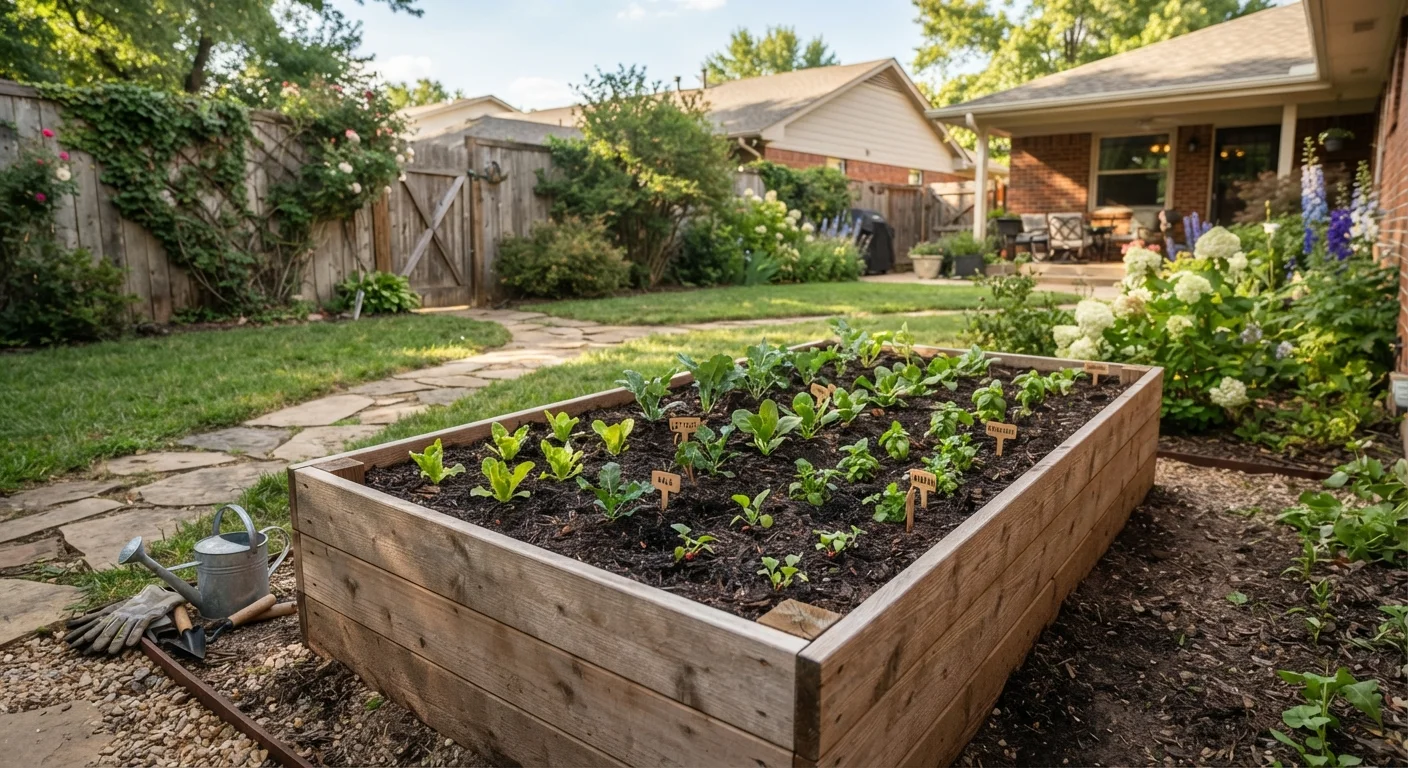
Photo: primesearches.net editorial
Key Takeaways
- A 4-by-8-foot bed is a manageable starting size that fits most yards and modest budgets.
- Untreated cedar or pine are common lumber choices because they resist rot without chemical additives.
- A blended soil mix of compost, topsoil, and coarse material gives roots better drainage than native yard dirt.
- Six or more hours of direct sun per day is the single most important site requirement for vegetables.
- Mulching and hand-watering with a soaker hose cut both water bills and weed pressure significantly.
- Cool-season crops like lettuce and kale let you start in early spring before warm-weather vegetables go in.
Why raised beds work for beginners
Raised beds reduce two of the biggest barriers for new food gardeners: poor native soil and overwhelming scale. When you build a contained bed, you fill it with a mix you control, so compaction, clay, and drainage problems in your yard soil stop mattering. The smaller footprint also makes it easy to stay on top of watering and weeding without the project expanding beyond what one person can manage on a weekend.
Compared to tilling a plot directly in the ground, a raised bed warms up faster in spring, which extends the growing season on both ends. The defined border discourages foot traffic over the root zone, keeping soil loose. For families with limited outdoor space, a single well-placed bed can produce a meaningful quantity of vegetables in an area no larger than a parking space.
Planning your bed: size, site, and materials
A 4-by-8-foot frame is a practical first bed. You can reach the center from either long side without stepping in, and the material quantities are straightforward to estimate. Taller beds around 10 to 12 inches deep suit most vegetables; going deeper adds cost without proportional benefit for most crops.
Site selection matters more than any other single decision. Vegetables need at least six hours of direct sun daily, so observe your yard at different times before committing to a spot. Avoid low areas that pool water after rain.
For lumber, untreated cedar or Douglas fir are common choices because they resist rot naturally. Standard pine costs less but breaks down faster, typically within five to seven years depending on your climate. Avoid railroad ties and any lumber with visible chemical staining. Galvanized screws or exterior wood screws hold frames together better than nails over time.
If your lawn needs attention beyond the bed itself, the trade-offs between ground cover options are worth understanding. See our comparison of sod and seeding for a breakdown of cost and effort before you decide how to handle the surrounding area.
Filling your bed with the right soil mix
Native yard soil alone rarely performs well inside a raised bed. It compacts, drains poorly, and often lacks the organic matter vegetables need. A common starting blend is roughly one-third compost, one-third topsoil, and one-third a coarse material such as aged wood chips or horticultural grit. This combination drains without drying out too fast and gives roots something to push through easily.
Compost is the most budget-sensitive ingredient. Many municipalities offer free or low-cost compost through local programs, so check with your city or county before buying bags. Bagged products work fine, but volume pricing at a local landscape supply yard is usually cheaper per cubic foot than retail bags for a full 4-by-8 bed.
Check for free compost in your area
To estimate volume, multiply the length by the width by the depth in feet, then divide by 27 to get cubic yards. A 4-by-8-foot bed that is 10 inches deep needs roughly 1.1 cubic yards of mix total.
What to plant and when
Planting in two rounds is a simple way to get more production from one bed through the year. Cool-season crops such as lettuce, spinach, kale, and peas go in early spring, four to six weeks before your last expected frost date. Once temperatures climb consistently above 80 degrees Fahrenheit, those crops bolt (send up a flower stalk and turn bitter), at which point you pull them and replace them with warm-season crops.
Warm-season vegetables like tomatoes, peppers, cucumbers, and squash go in after your last frost date. Seed packets and plant tags list days to maturity, which helps you confirm there is enough warm season left before fall frost arrives in your region. Your local cooperative extension office publishes planting calendars specific to your county, and those calendars are free.
Avoid crowding. Packed plants compete for light and airflow, which promotes fungal disease. Spacing guides on seed packets reflect real performance data, not conservative estimates.
Ongoing care on a budget
A 2- to 3-inch layer of straw or wood chip mulch on top of the soil after planting slows water evaporation and blocks weed seeds from germinating. This one step can cut watering frequency noticeably during dry stretches and reduces weeding time through the season.
Soaker hoses or drip lines placed under the mulch deliver water directly to roots and cost less to run than overhead sprinklers in most cases, because less water is lost to evaporation. A basic timer adds convenience without a large upfront investment.
Fertilizing requirements depend on how much compost you started with. A bed with a good compost ratio may not need additional fertilizer for the first season. If leaves turn pale or growth stalls mid-season, a balanced granular fertilizer worked into the top inch of soil typically addresses nutrient deficiency. Test soil every two to three years if you plan to garden consistently; many cooperative extension programs offer affordable soil testing.
At the end of each growing season, top the bed with an inch or two of fresh compost. This replenishes organic matter that plants consumed and keeps the soil structure from degrading over time.
Frequently Asked Questions
The content provided on our blog site traverses numerous categories, offering readers valuable and practical information. Readers can use the editorial team’s research and data to gain more insights into their topics of interest. However, they are requested not to treat the articles as conclusive. The website team cannot be held responsible for differences in data or inaccuracies found across other platforms. Please also note that the site might also miss out on various schemes and offers available that the readers may find more beneficial than the ones we cover.