
Credit Scores Explained: What the Number Actually Measures and Why It Matters

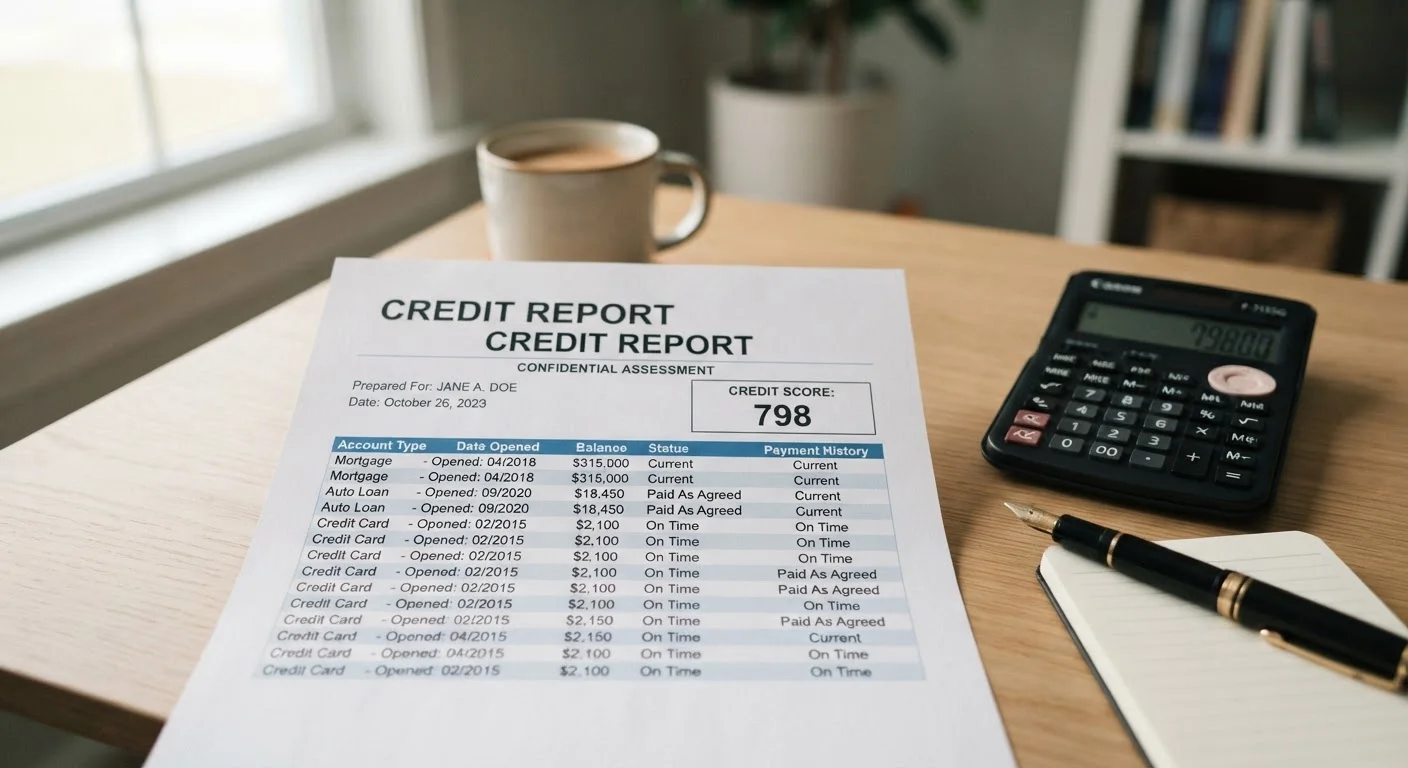
Photo: primesearches.net editorial
Key Takeaways
- Payment history is the single largest factor in most credit score calculations, accounting for roughly 35% of a FICO Score.
- Credit utilization, or how much of your available revolving credit you are using, is the second most influential factor.
- A score below 580 is generally considered poor, while a score above 740 is considered good to very good by most lenders.
- Checking your own credit score does not lower it; only hard inquiries from lenders can have a small, temporary effect.
- Credit scores affect more than loan approvals; landlords, insurers, and some employers may review them as well.
- All consumers are entitled to free annual credit reports from each of the three major bureaus through AnnualCreditReport.com.
How a credit score is calculated
Credit scores are not arbitrary. Under the FICO model, five factors contribute to the final number, each weighted differently.
- Payment history (35%): Whether you have paid past accounts on time. A single missed payment can lower a score noticeably, especially on an otherwise clean record.
- Amounts owed (30%): How much revolving credit you are currently using compared to your limits. Using a high percentage of available credit, even if you pay it off monthly, can raise this ratio at the time the bureau snapshot is taken.
- Length of credit history (15%): How long your accounts have been open. Older accounts generally help.
- Credit mix (10%): Whether you have a variety of account types, such as a mortgage, an auto loan, and a credit card.
- New credit (10%): Recent applications for new credit. Each hard inquiry can trim a score by a small amount for a short period.
VantageScore uses a similar set of factors with slightly different weighting, but the practical guidance for consumers is largely the same across both models.
35%
Share of FICO Score from payment history
According to Fair Isaac Corporation's published scoring breakdown, payment history carries more weight than any other single factor.
200+
Million Americans with a FICO Score on file
Fair Isaac Corporation has reported that over 200 million US consumers have FICO Scores, making it the most widely used credit scoring system in the country.
7 years
How long most negative items remain on a report
Under the Fair Credit Reporting Act, most derogatory marks, including late payments and collections, are removed from credit reports after seven years.
What lenders actually do with your score
A lender pulls your credit score to estimate default risk before approving a loan or line of credit. Beyond a simple yes or no decision, the score influences the interest rate offered. A borrower with a score of 760 applying for a 30-year mortgage will typically receive a lower rate than a borrower with a 640 score for the same loan amount. Over decades, that difference can amount to tens of thousands of dollars in total interest paid.
The effect extends beyond borrowing. Landlords in many states can legally use credit scores when evaluating rental applications. Auto insurers in most states use credit-based insurance scores, a close relative of the standard credit score, as one variable in setting premiums. Some employers in certain industries review credit reports as part of background checks, though federal law requires written consent before they can do so.
If you use a travel rewards card to earn miles or points, your ability to qualify for cards with strong sign-up bonuses generally depends on your credit score. See how the rewards system works for context on how card approval thresholds affect access to those programs.
Common misconceptions
One widely repeated misunderstanding is that checking your own score damages it. It does not. Pulling your own report is a soft inquiry and has no effect on the number. Hard inquiries, generated when a lender checks your credit during an application, can reduce a score by a few points, but this effect is usually small and temporary.
Another misconception is that carrying a small balance on a credit card builds credit faster than paying in full. It does not. Paying in full each month keeps your utilization low and avoids interest charges. The credit bureau does not know whether you paid interest; it only sees the balance reported at the statement close date.
Income is not a factor in credit scores at all. A household earning $40,000 a year can have a higher score than one earning $200,000, depending entirely on payment behavior and borrowing patterns.
Reduce utilization before a major application
How to review your credit information
The three major bureaus, Equifax, Experian, and TransUnion, each maintain a separate file on you. They do not automatically share data with each other, so errors on one report may not appear on another. Federal law gives every consumer the right to a free report from each bureau once per year through AnnualCreditReport.com, the only federally authorized source. During certain periods, the bureaus have offered more frequent free access; check the site directly for current availability.
When reviewing a report, look for accounts you do not recognize, incorrect late payment notations, and balances that appear higher than they should. Disputing an error is a formal process: you submit a written dispute to the bureau that holds the incorrect data, and the bureau is required to investigate within 30 days under the Fair Credit Reporting Act.
Understanding the numbers on your financial accounts, whether a loan balance, a credit limit, or an interest rate, is part of managing money effectively. The same logic applies to understanding vehicle readouts; for example, what dashboard numbers actually mean is a useful mental habit to apply across all the figures you track regularly.
This article is for informational purposes only and does not constitute personalized financial, legal, or credit advice. Consult a qualified financial professional before making decisions about your credit or borrowing.
Frequently Asked Questions
The content provided on our blog site traverses numerous categories, offering readers valuable and practical information. Readers can use the editorial team’s research and data to gain more insights into their topics of interest. However, they are requested not to treat the articles as conclusive. The website team cannot be held responsible for differences in data or inaccuracies found across other platforms. Please also note that the site might also miss out on various schemes and offers available that the readers may find more beneficial than the ones we cover.