
Fuel Economy Myths That Are Quietly Emptying Your Tank

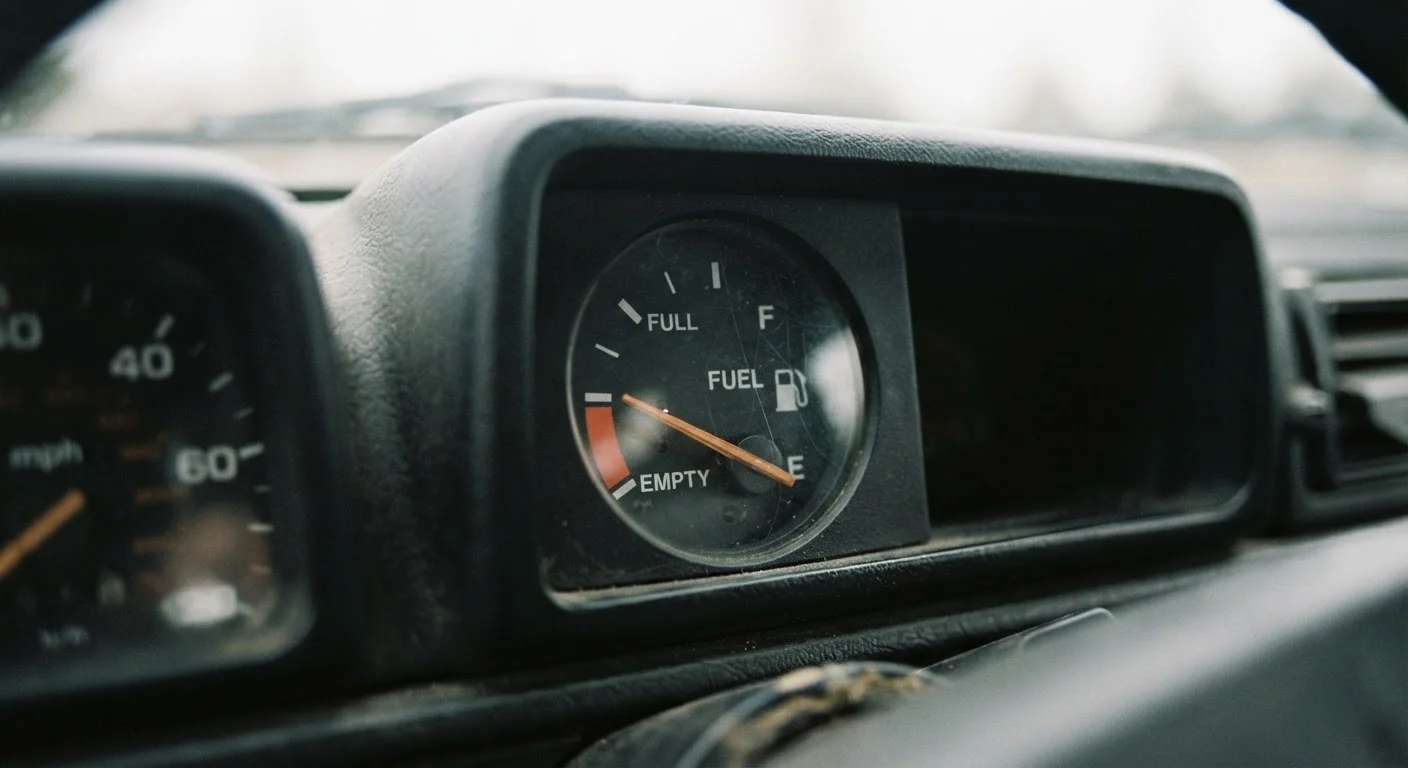
Photo: primesearches.net editorial
Key Takeaways
- Warming up a modern engine by idling wastes fuel and provides no mechanical benefit.
- Most vehicles run fine on regular unleaded; premium gas rarely improves economy for engines not designed for it.
- Driving at 55 mph is not always the most fuel-efficient speed for every vehicle.
- Underinflated tires measurably reduce fuel economy, but the gain from overinflation is not worth the safety trade-off.
- Air conditioning at highway speeds is often more efficient than opening windows due to aerodynamic drag.
Why fuel economy myths persist
Many fuel-saving beliefs formed decades ago, when carburetors, points ignition, and bias-ply tires were standard. Modern vehicles work differently, and advice suited to a 1975 sedan can actively hurt a 2015 fuel-injected engine. The cost adds up quietly: a household following two or three wrong assumptions may spend hundreds of extra dollars on gas each year without realizing the source of the waste.
This article does not cover every variable that affects fuel economy. Engine size, driving terrain, load weight, and vehicle age all matter. The goal is to correct the specific myths that come up most often and cost drivers the most money. For a broader look at where monthly car costs tend to creep up, see why your car costs more than it should.
Myth
You need to let your car idle for several minutes before driving in cold weather to warm up the engine.
Fact
Modern fuel-injected engines reach operating temperature faster by driving gently than by sitting still. Idling for more than 30 seconds wastes fuel with no protective benefit.
This advice made sense for carbureted engines that needed time to stabilize fuel mixture before moving. Fuel injection systems handle cold starts automatically. The engine warms up by circulating oil under light load, which only happens when the vehicle moves. Long cold idling also deposits unburned fuel on cylinder walls, which can thin out the oil film and increase wear over time. A 30-second warm-up before pulling out is sufficient for most modern vehicles in typical U.S. winters.
Myth
Using premium gasoline gives any car better fuel economy and is worth the extra cost.
Fact
Premium fuel improves performance only in engines specifically designed for it. Putting premium in a regular-grade engine produces no measurable fuel economy gain.
Premium gasoline has a higher octane rating, which resists engine knock (premature combustion) in high-compression or turbocharged engines. If your owner's manual says 'regular recommended,' the engine management system is calibrated for 87 octane. Paying 20 to 50 cents more per gallon for premium in that situation is money spent with no return. Check the door jamb sticker or owner's manual: if the manufacturer requires premium, use it; if it only recommends it, regular is generally fine. If it makes no mention of premium at all, regular is the correct choice.
Myth
Driving at 55 mph is the most fuel-efficient speed for every vehicle.
Fact
Fuel efficiency peaks at different speeds depending on the vehicle, but most modern cars lose efficiency noticeably above 60 to 65 mph rather than at a specific universal number.
The 55 mph figure became popular after the 1970s oil embargo, when a national speed limit was set partly for fuel conservation. The underlying aerodynamic principle is real: wind resistance increases with the square of speed, so fuel consumption rises steeply at higher speeds. However, the specific peak efficiency point varies by vehicle shape, transmission gearing, and engine characteristics. The U.S. Department of Energy notes that fuel economy typically drops significantly above 50 mph, with each 5 mph over that threshold costing more in gas. For most drivers, maintaining a steady 60 to 65 mph on the highway is a practical target that balances efficiency with realistic traffic flow.
Myth
Overinflating tires slightly above the recommended pressure improves fuel economy enough to be worth it.
Fact
Overinflation reduces the tire's contact patch with the road, which shortens tire life and reduces braking ability. Any fuel economy gain is marginal and not worth the safety trade-off.
A harder tire does roll with slightly less resistance, but the reduction in grip affects stopping distance and cornering stability. Tires worn unevenly from overinflation also need replacement sooner, costing more than any fuel savings could offset. The correct approach is to inflate to the pressure listed on the vehicle door jamb sticker, check it monthly (tires lose about 1 psi per month naturally), and check again after significant temperature drops. Cold weather causes tire pressure to drop roughly 1 psi for every 10 degrees Fahrenheit of temperature decrease.
Myth
Running the air conditioner always uses more fuel than opening the windows, so you should always drive with windows down.
Fact
At highway speeds, open windows create enough aerodynamic drag that the fuel cost of running the A/C is similar or lower. Below 45 mph, windows down is generally more efficient.
This is a genuine trade-off that depends on speed. At city speeds, the drag from open windows is small and the compressor load from A/C is a clear fuel cost, so windows down wins. At highway speeds (65 mph or above), open windows increase aerodynamic drag enough to reduce fuel economy by a meaningful amount, roughly canceling out or exceeding the compressor cost. The practical guidance: use windows down in slow city driving, and use A/C at highway speeds while keeping cabin temperature moderate rather than running the system at maximum cold.
Myth
Fuel additives sold at auto parts stores measurably improve fuel economy in a typical vehicle.
Fact
The U.S. Federal Trade Commission has stated that no fuel additive has been shown to deliver significant fuel economy improvements in properly maintained vehicles.
Some additives are marketed with efficiency claims, but independent testing has not confirmed meaningful gains for vehicles in normal working condition. Modern gasoline already contains detergent additives required by the EPA. If a vehicle runs poorly and an additive temporarily masks the symptom, that is a sign the underlying problem needs a mechanic's attention, not a bottle from the shelf. Money spent on additives is more productively directed toward the maintenance items (air filter, spark plugs, fresh oil) that actually affect combustion efficiency.
What actually moves the needle on fuel economy
Tire pressure is one of the few easy, free adjustments that produces a measurable result. The U.S. Department of Energy has noted that tires inflated to the vehicle manufacturer's recommended pressure (found on the door jamb sticker, not the tire sidewall) can improve fuel economy by roughly 0.5 to 3 percent compared with significantly underinflated tires. That is not dramatic, but it is real, and it takes two minutes to check.
15-30%
Fuel economy lost to aggressive driving
The U.S. Department of Energy estimates aggressive acceleration and braking in stop-and-go traffic can reduce fuel economy by 15 to 30 percent versus steady-speed driving.
~0.5-3%
Economy gain from correct tire inflation
The U.S. Department of Energy notes that maintaining manufacturer-recommended tire pressure can improve fuel economy by roughly 0.5 to 3 percent compared with significantly underinflated tires.
Up to 7%
Economy drop above 50 mph per 5 mph increase
U.S. Department of Energy data shows fuel economy can fall by 7 to 14 percent for each 5 mph driven above 50 mph, depending on the vehicle.
Smooth acceleration and early, gentle braking consistently deliver better real-world economy than any fuel additive on the market. Aggressive stop-and-go driving can reduce fuel economy by 15 to 30 percent compared with steady-speed travel, according to U.S. Department of Energy data. Combining trips, parking farther away to avoid circling lots, and using cruise control on long highway stretches all reduce fuel consumed per mile in ways drivers can control directly.
Deferred maintenance is also a quiet drain. A clogged air filter, worn spark plugs, or a faulty oxygen sensor can reduce fuel economy without triggering any obvious symptom. The habits that extend a high-mileage vehicle's life often overlap with the same practices that protect fuel economy over time. Drivers who address deferred maintenance tend to see the pump cost drop alongside the repair bill.
Fuel economy is also part of a wider pattern of household spending assumptions that turn out to be wrong. The same skepticism worth applying to fuel tips applies equally to money myths that hold families back in other areas of the budget.
This article is for general informational purposes only. Vehicle performance varies by make, model, and condition. Consult your owner's manual and a qualified mechanic for guidance specific to your vehicle.
The content provided on our blog site traverses numerous categories, offering readers valuable and practical information. Readers can use the editorial team’s research and data to gain more insights into their topics of interest. However, they are requested not to treat the articles as conclusive. The website team cannot be held responsible for differences in data or inaccuracies found across other platforms. Please also note that the site might also miss out on various schemes and offers available that the readers may find more beneficial than the ones we cover.