
Interior Paint Finish Types and When to Use Each One

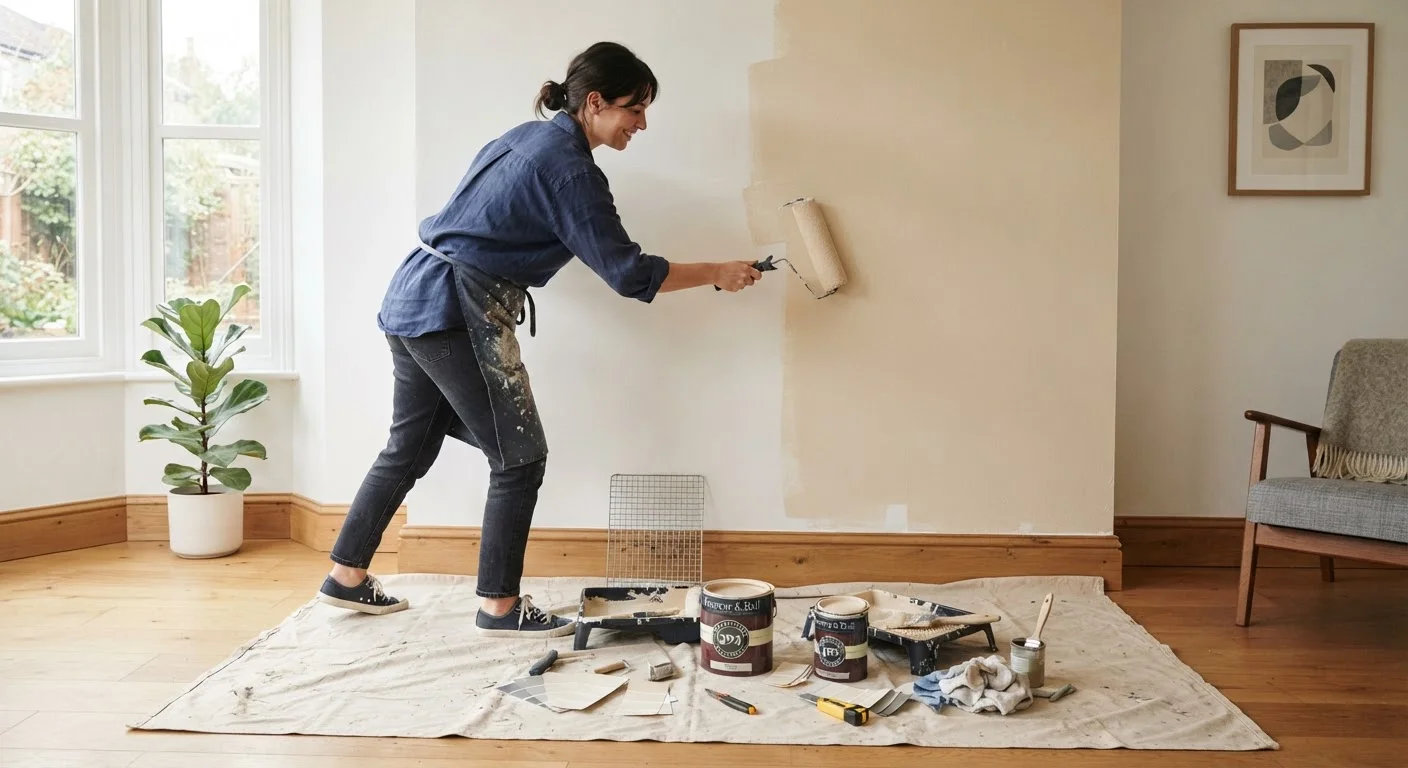
Photo: primesearches.net editorial
Why paint finish matters as much as color
Color gets most of the attention when homeowners plan a paint project, but finish determines how a wall holds up over time. Finish controls sheen level, how easily a surface cleans, and how much it hides or reveals imperfections in drywall or plaster. Picking the wrong sheen for a high-traffic area can mean scrubbing off paint while trying to wipe away a scuff.
Paint finishes sit on a spectrum from completely matte to highly reflective. The more sheen a finish has, the harder its surface and the easier it cleans. The tradeoff is that glossier finishes telegraph every ding, nail pop, and taping seam. Knowing where each finish sits on that spectrum is the fastest way to make a confident choice.
| Lowest sheen option | Flat (matte) |
| Best finish for ceilings | Flat or matte |
| Most versatile everyday finish | Eggshell |
| Best finish for kitchens and bathrooms | Semi-gloss |
| Best finish for interior trim and doors | Semi-gloss or high-gloss |
| Most durable finish | High-gloss |
| Finish that hides wall flaws best | Flat |
| Finish that reveals wall flaws most | High-gloss |
Flat and matte finishes
Flat paint has zero sheen and absorbs light rather than reflecting it. This makes colors look their richest and hides surface flaws more than any other finish. It works well on ceilings and in low-traffic adult bedrooms where walls rarely get touched.
The drawback is durability. Flat paint is not washable in any meaningful sense. Scrubbing removes the paint film along with the dirt. Reserve it for spaces where cleaning the walls is unlikely. Some paint lines offer a "washable flat" or "matte" variant that adds a trace of binder for slightly better durability while keeping the low sheen.
Eggshell and satin finishes
Eggshell has a very slight sheen, roughly what you would see on an actual eggshell. It tolerates light cleaning and hides imperfections reasonably well. Most painting professionals and interior designers treat eggshell as the default for living rooms, dining rooms, and adult bedrooms where walls will occasionally be wiped but are not subject to daily abuse.
Satin sits one step higher in sheen. It cleans more easily than eggshell and holds up to moderate moisture, which makes it a practical choice for hallways, children's bedrooms, and family rooms. The slightly higher gloss does make surface flaws more visible than eggshell, so proper prep work matters more before painting.
Semi-gloss and gloss finishes
Semi-gloss is the standard finish for kitchens, bathrooms, and laundry rooms. Its hard, smooth surface resists moisture and cleans up with minimal effort. It is also the conventional choice for trim, doors, and window casings throughout a home because those surfaces take the most contact and need to be wiped frequently.
High-gloss paint is the most durable and most reflective option. Builders and homeowners use it on cabinetry, furniture-grade millwork, and interior doors that see constant handling. It telegraphs surface imperfections clearly, so achieving a clean result requires thorough sanding and priming. High-gloss walls are uncommon in residential spaces, but small accent areas like a painted wainscot panel or a powder room can carry the look effectively.
Quick reference by room
Matching finish to room is straightforward once you factor in moisture exposure, foot traffic, and how often walls will be touched or cleaned.
- Ceilings: flat or matte
- Living rooms and dining rooms: eggshell
- Adult bedrooms: flat or eggshell
- Children's bedrooms and playrooms: satin
- Hallways and stairwells: satin
- Kitchens: semi-gloss
- Bathrooms: semi-gloss
- Trim, doors, and casings throughout: semi-gloss or high-gloss
- Cabinetry and detail millwork: high-gloss
Sheen
The amount of light a dried paint film reflects. Higher sheen means a more reflective, harder surface that resists moisture and cleans more easily.
Flat finish
A paint finish with no measurable sheen. It absorbs light, hides surface imperfections, and is not suitable for frequent cleaning.
Eggshell finish
A low-sheen finish with a very slight reflective quality, similar to the surface of an eggshell. More durable than flat and suitable for most living areas.
Satin finish
A mid-level sheen finish that balances cleanability with a soft glow. Works well in moderate-traffic rooms and spaces with occasional moisture.
Semi-gloss finish
A noticeably reflective finish that resists moisture and cleans easily. Standard for kitchens, bathrooms, and all interior trim surfaces.
High-gloss finish
The most reflective interior finish. Very durable and easy to clean, but reveals surface imperfections clearly, so it requires careful surface preparation.
Paint binder
The ingredient in paint that holds pigment particles together and bonds the film to a surface. More binder generally means a harder, more washable finish.
The content provided on our blog site traverses numerous categories, offering readers valuable and practical information. Readers can use the editorial team’s research and data to gain more insights into their topics of interest. However, they are requested not to treat the articles as conclusive. The website team cannot be held responsible for differences in data or inaccuracies found across other platforms. Please also note that the site might also miss out on various schemes and offers available that the readers may find more beneficial than the ones we cover.