
Composting at Home: Separating the Science from the Myths

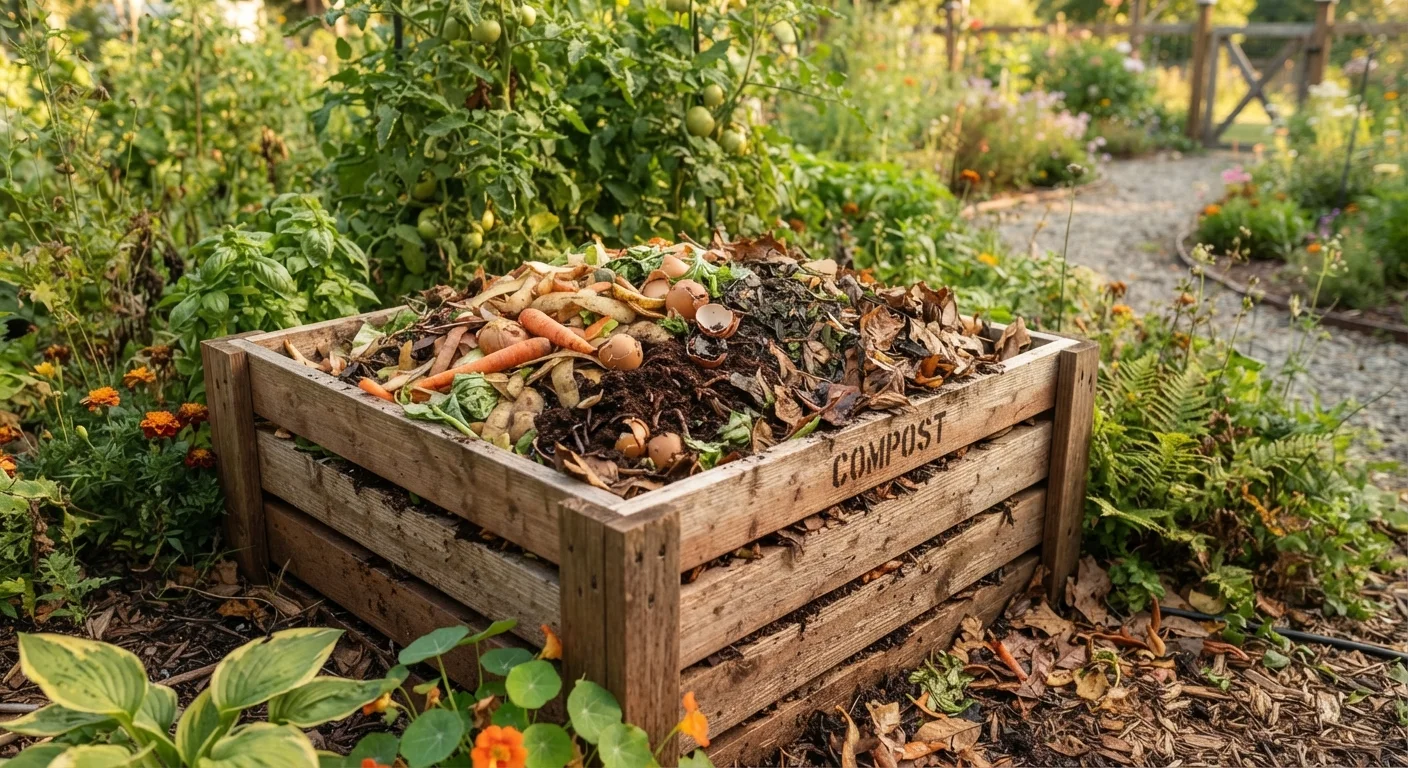
Photo: primesearches.net editorial
Key Takeaways
- A properly balanced compost pile produces little to no noticeable odor.
- Yard waste, cardboard, and paper are composted just as effectively as kitchen scraps.
- Finished compost can be ready in as little as two to three months with active management.
- Cold or passive composting still works; it just takes longer than a managed hot pile.
- Home composting reduces household waste and produces free soil amendment for gardens.
Why composting myths persist
Composting has a reputation problem. Many homeowners picture a reeking, pest-attracting heap that demands constant attention and arcane knowledge. Those images keep a genuinely simple, low-cost practice out of reach for families who would otherwise benefit from it. Most of the hesitation traces back to a handful of misconceptions that spread because a mismanaged pile really can go wrong, and those failures become the reference point for everyone nearby.
The science underneath composting is straightforward: organic material decomposes through microbial activity, and the conditions that support those microbes determine how fast and how pleasantly the process runs. Getting those conditions right does not require expensive equipment or daily labor. It requires understanding a few basic principles and correcting some common wrong assumptions.
Myth
Compost piles always smell bad, which makes them unsuitable for a typical backyard.
Fact
A properly managed pile with balanced inputs and adequate airflow produces an earthy smell, not a foul one.
Unpleasant odors come from anaerobic conditions: too much moisture, too many nitrogen-rich materials packed together, or not enough airflow. When the carbon-to-nitrogen ratio is balanced and the pile is turned periodically to introduce oxygen, aerobic bacteria handle decomposition efficiently and the byproduct is largely carbon dioxide and water vapor. The earthy scent of finished compost is the same smell you notice in a healthy forest floor.
Myth
You can only compost kitchen scraps; yard waste and cardboard belong in the trash.
Fact
Yard waste and cardboard are ideal composting inputs and often make up the majority of a healthy pile.
Carbon-rich materials such as dry leaves, cardboard, and newspaper are what keep a pile aerated and odor-free. Kitchen scraps alone tend to produce a wet, dense, smelly mass because they are high in nitrogen and moisture. Adding shredded cardboard or fallen leaves corrects that imbalance. Many municipalities even offer free wood chip drops or leaf collection that homeowners can redirect into their own compost systems rather than leaving materials at the curb.
Myth
Composting requires a lot of space and special equipment to work.
Fact
A simple three-sided bin made from pallets or a wire cylinder roughly three feet across is enough to compost effectively.
A minimum volume of about one cubic yard helps retain heat in cold weather, but the structure itself can be improvised from materials many households already have. Dedicated tumblers and multi-bin systems can speed the process or make turning easier, but they are not necessary. Backyard composting began long before commercial bins existed, and the biology does not require manufactured containers.
Myth
Compost takes years to be ready and is not worth the wait for most homeowners.
Fact
Actively managed piles in warm conditions produce finished compost in as little as two to three months.
The timeline depends on how finely materials are chopped, how often the pile is turned, ambient temperature, and moisture levels. Shredding inputs before adding them dramatically increases the surface area available to microbes and can cut decomposition time roughly in half. Even a cold, unturned pile in a cooler climate will produce usable material within a year, which fits naturally into a seasonal garden cycle. Starting in spring often yields amendment in time for fall planting.
Myth
Adding worms to a compost pile is necessary for it to work.
Fact
Worms improve finished compost quality but are not required for decomposition to occur.
Bacteria and fungi do the primary decomposition work in a compost pile. Worms, when present, process already-broken-down material and produce castings that further improve the amendment. In a hot pile, temperatures can actually be too high for earthworms to survive comfortably. Vermicomposting, a separate process using a contained bin at room temperature, is designed around worms and produces a concentrated amendment, but it is a different system from a standard outdoor pile rather than a requirement of it.
What you can actually put in a compost pile
One of the most limiting beliefs about home composting is that it only accepts a narrow set of materials. In practice, a healthy pile needs two categories of input: nitrogen-rich materials (often called greens) and carbon-rich materials (browns). Kitchen scraps such as fruit peels, vegetable trimmings, and coffee grounds fall into the greens category. But so do fresh grass clippings and garden weeds that have not yet gone to seed.
Browns include dry leaves, cardboard torn into smaller pieces, newspaper, paper bags, straw, and wood chips. These materials are abundant in most households and freely available. A pile composed mostly of kitchen scraps without enough browns will become wet and odorous; a pile of mostly browns without greens will decompose very slowly. Balancing the two, roughly two to three parts browns to one part greens by volume, keeps microbial activity healthy without creating smell or attracting pests.
Meat, dairy, cooked foods with oils, and pet waste are generally excluded from open backyard bins because they can attract animals and create odors at typical home-composting temperatures. Some closed or enclosed systems handle a wider range of materials, but for a standard outdoor pile, sticking to plant-based inputs and paper products keeps things simple and effective. Just as some apparent money-saving shortcuts backfire in other areas of home management, such as the false economies covered in cheap pet care myths, cutting corners in compost inputs can create bigger problems than starting with cleaner materials.
Managing moisture, heat, and time
A compost pile needs moisture similar to a wrung-out sponge: damp throughout, but not waterlogged. Dry piles stall because microbial activity slows without water. Soggy piles lose oxygen and shift toward anaerobic decomposition, which produces the sulfur-like odors associated with compost gone wrong. Checking moisture when you turn the pile and adding dry browns or a splash of water as needed keeps the process on track.
Heat is a byproduct of active microbial decomposition, not a requirement you need to manufacture. A pile with the right balance of materials and adequate moisture will generate its own internal heat, sometimes reaching 130 to 160 degrees Fahrenheit at the core. That temperature range kills many weed seeds and pathogens. Turning the pile every one to two weeks moves cooler outer material toward the center and accelerates breakdown, though it is not strictly required for composting to succeed.
Time expectations vary widely based on how actively the pile is managed. A turned, well-balanced pile in warm weather can produce usable compost in two to three months. A cold pile that receives materials but no turning will compost eventually, often in six to twelve months or longer. Neither approach is wrong; they suit different schedules and effort levels. The finished product, dark and crumbly with an earthy smell, works as a soil amendment in vegetable beds, around perennials, or mixed into container growing media.
The content provided on our blog site traverses numerous categories, offering readers valuable and practical information. Readers can use the editorial team’s research and data to gain more insights into their topics of interest. However, they are requested not to treat the articles as conclusive. The website team cannot be held responsible for differences in data or inaccuracies found across other platforms. Please also note that the site might also miss out on various schemes and offers available that the readers may find more beneficial than the ones we cover.