
Renting vs. Owning a Home: A Financial Comparison for Everyday Households

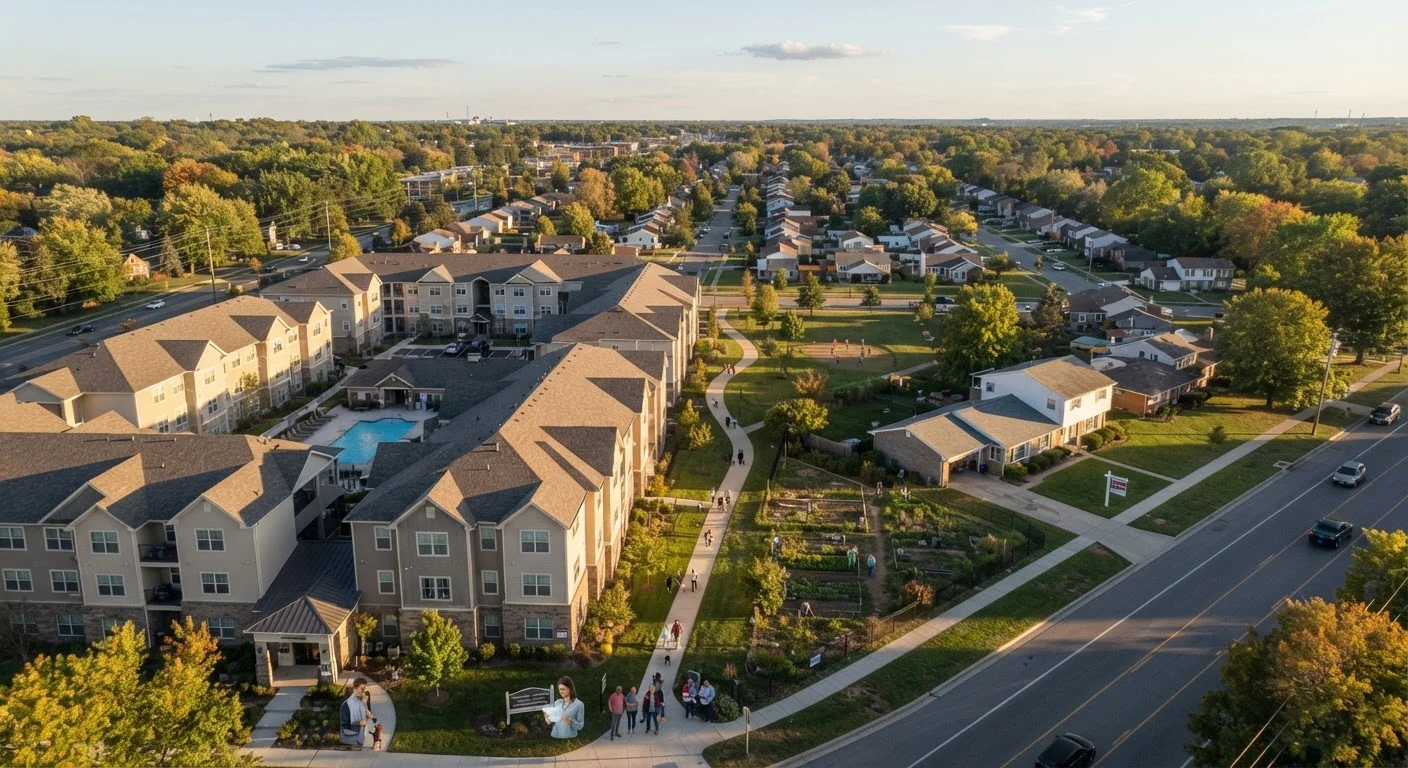
Photo: primesearches.net editorial
Key Takeaways
- Owning a home builds equity over time, but the total cost is often higher than the mortgage payment alone.
- Renting offers flexibility and predictable monthly costs, though it provides no ownership stake.
- The financial case for buying depends heavily on how long you plan to stay in one place.
- Neither path is universally superior; the right choice depends on your household's income, savings, and goals.
- Hidden costs like maintenance, property taxes, and opportunity cost can shift the math significantly.
Why this comparison is harder than it looks
The idea that buying is always smarter than renting is one of the most repeated assumptions in personal finance. It sounds logical: rent money disappears, mortgage payments build ownership. But that framing leaves out a lot. Transaction costs, maintenance, opportunity cost, and local market conditions all affect which path costs more over time.
This comparison treats both options honestly, without assuming one is obviously better. For more on how popular financial assumptions can mislead households, see common money myths that hold families back.
| Renting | Owning | |
|---|---|---|
| Upfront costs | First/last month, deposit | Down payment plus closing costs (often 15-25% of price) |
| Monthly cost predictability | High (fixed lease term) | Variable (taxes, maintenance, insurance add up) |
| Equity accumulation | None | Gradual, accelerating in later years |
| Flexibility to relocate | High (lease end or break) | Low (selling takes time and money) |
| Exposure to maintenance costs | Low (landlord's responsibility) | High (owner's full responsibility) |
| Long-term cost (10+ years) | No asset to show | Mortgage paid down, potential net worth gain |
| Transaction costs to exit | Low | High (typically 6-10% of sale price) |
What renting actually costs
Rent is often called "throwing money away," but that framing ignores what renters get in return: housing, flexibility, and predictability. Renters pay a fixed monthly cost without exposure to property tax increases, surprise repair bills, or depreciation risk.
The real financial drawback of renting is the absence of equity accumulation. Over 10 or 20 years, a renter who pays consistently builds no ownership stake in the property. However, the money not tied up in a down payment can be invested elsewhere, and that opportunity should be counted in any honest comparison.
Renters also carry lower transaction costs. There are no closing costs going in, no agent commissions going out, and moving for a job or life change costs far less than selling a home.
What owning actually costs
A mortgage payment is only one part of what homeowners pay. Property taxes, homeowner's insurance, HOA fees where applicable, and routine maintenance add considerably to the monthly total. A commonly cited estimate is that homeowners should budget 1% to 2% of a home's value annually for maintenance alone, though this varies by home age and condition.
Buying also involves significant upfront costs. A down payment of 10% to 20% on a median-priced US home represents tens of thousands of dollars. Closing costs typically run another 2% to 5% of the purchase price. Those funds are illiquid once committed.
When a homeowner sells, agent commissions and other selling costs often consume 6% to 10% of the sale price. This means a home generally needs to appreciate meaningfully before a sale generates net profit. The annual financial health check is a useful place to track whether your housing costs remain proportionate to your income over time.
The break-even horizon
Most financial analyses find that buying becomes more cost-effective than renting only after a household stays in the same home for at least five to seven years. Before that threshold, transaction costs and the slow early equity buildup in a standard amortizing mortgage often make renting cheaper in total.
The break-even point shifts based on local home price growth, local rent levels, mortgage interest rates, and what a renter does with the money saved by not buying. There is no universal number that applies everywhere.
Households weighing other major financial decisions alongside this one may find it useful to read about balancing an emergency fund against debt paydown, since housing decisions intersect directly with how much liquid savings a household can maintain.
Factors that tip the balance
Several practical variables matter beyond the raw numbers:
- Job stability: A household with uncertain or variable income faces more risk as an owner, since missed mortgage payments have steeper consequences than a lease break.
- Local market conditions: In some cities, price-to-rent ratios make buying expensive relative to renting for years at a time.
- Family size and school district needs: These may create a preference for ownership even when the financial case is not decisive.
- Credit profile: Buyers with lower credit scores typically pay higher mortgage interest rates, which widens the cost gap.
These are factors to weigh, not a checklist that produces a verdict. A licensed financial adviser or HUD-approved housing counselor can help households model the comparison for their specific income, savings, and local market.
This article is for general informational purposes only and does not constitute personalized financial or legal advice. Consult a qualified professional before making housing or financial decisions.
The content provided on our blog site traverses numerous categories, offering readers valuable and practical information. Readers can use the editorial team’s research and data to gain more insights into their topics of interest. However, they are requested not to treat the articles as conclusive. The website team cannot be held responsible for differences in data or inaccuracies found across other platforms. Please also note that the site might also miss out on various schemes and offers available that the readers may find more beneficial than the ones we cover.